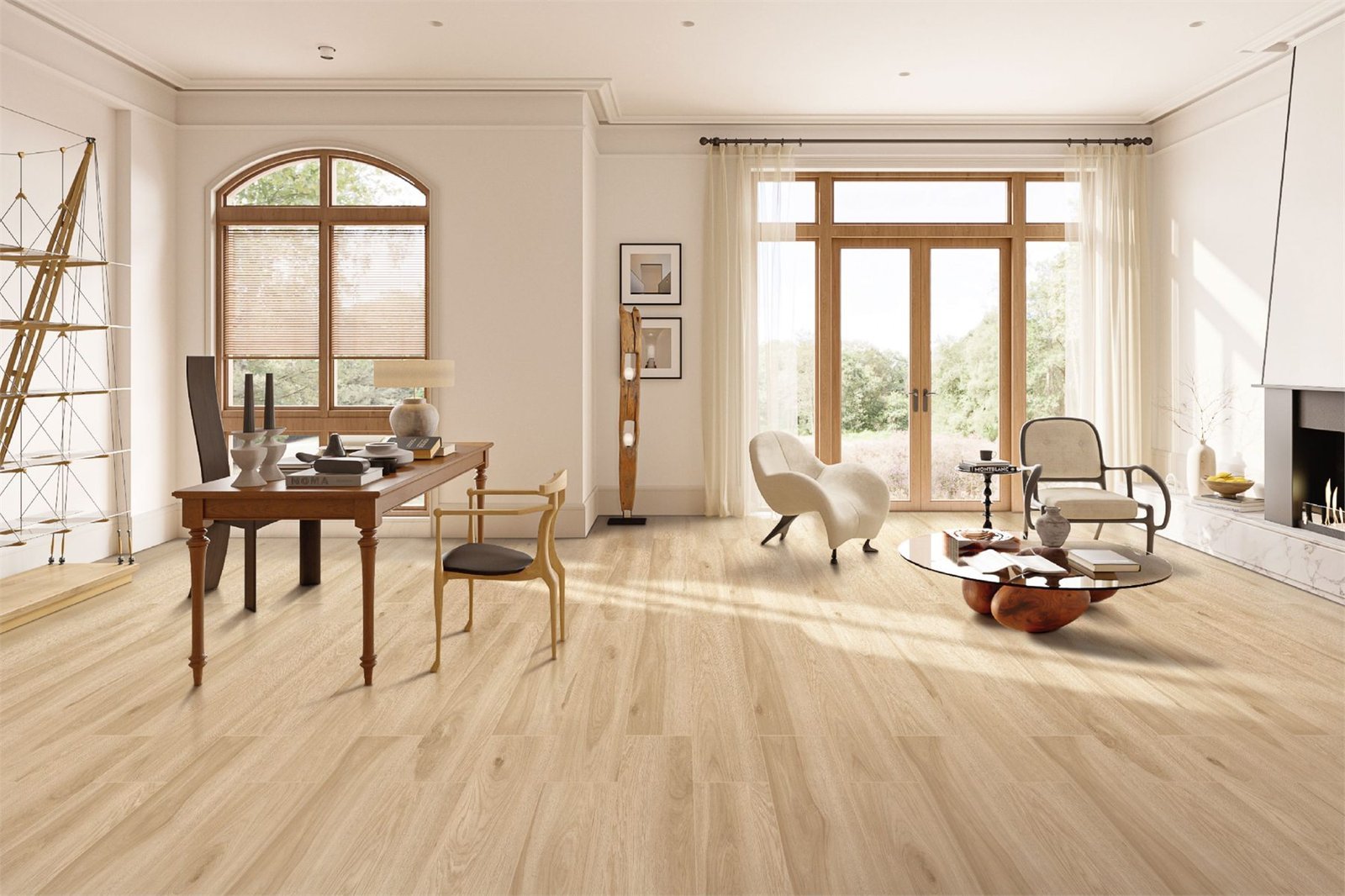
Cover image: Room illustration from YiRong’s collection imagery. Use it for design context; confirm colour and grain with physical samples.
By YiRong Ceramics.
Start by matching each sample to a product code and size. Review several pieces together for grain and colour, record your observations, and check the supporting technical documents for the intended use. Keep the agreed reference samples and a written record so your team and the supplier can identify what was reviewed.
For importers, distributors and project buyers, the aim is to turn a visual preference into a clear product selection. This checklist helps you organise that review before discussing a bulk order.
Identify what each sample represents
Label each sample with the supplier name, model code, stated size and date received. Keep any packaging labels and photograph the identification details. If a code is missing or differs from the quotation, resolve it before comparing the products.
For example, a record for 122A81 wood-look tile should include both the model code and its stated 200 × 1200 mm format. Use the same identifiers on your sample notes and enquiry.
Ask whether you are reviewing a cut piece or a full tile. A cut piece shows only part of the design; a full tile lets you examine the grain over its entire face. Ask the supplier which sample arrangement can show the range of designs for the selected model.
If you are also deciding between plank sizes, use our tile format comparison. Keep samples from different sizes clearly separated, even when their colours look similar.
Compare grain and colour across several pieces
Arrange the available samples together on a stable surface. Look first at the group, then examine individual pieces. Record the features that matter to your selection: background colour, contrast in the grain, prominent knots, and differences between the pieces you received.
Distinguish two questions: how much visual variation is intended within the design, and how the samples relate to the production proposed for your order. Ask the supplier to explain both for the exact model. A single appealing piece cannot show every design face or establish what a later batch will look like.
Review the samples under the lighting relevant to your showroom or project, alongside other selected materials where possible. Use photographs to document the arrangement and labels, while keeping the physical samples as the reference. Our product selection FAQ explains why screen images should be followed by physical sample review.
Record observations separately from technical approval
Examine the face and edges of each sample. Photograph any visible chip, mark or other concern and identify the affected piece. Ask the supplier to clarify the concern instead of drawing a conclusion about an entire model from an unexplained sample condition.
For dimensions, ask for the declared size, thickness and applicable dimensional requirements. A measurement made during sample review can raise a useful question, but formal assessment needs the relevant method and acceptance criteria. ISO 10545-2 covers methods for evaluating ceramic tile dimensions and surface quality. ISO 10545-2:2018
Check performance through documents that identify the relevant product or clearly defined product range. For water absorption, request the result and test method; ISO 10545-3 describes a method for measuring water absorption and related properties. ISO 10545-3:2018
If the project specifies other performance requirements, list them individually and request the corresponding evidence. Confirm with the project team which requirements apply. A wood-grain appearance or a surface that feels textured does not provide a measured performance result.
Keep one review record for each model
Use a separate record for each model and size so that comments, photographs and documents remain connected to the right product.
| Record | What to enter |
|---|---|
| Product identity | Supplier, model code, size and product-page link |
| Sample details | Date received, number of pieces, cut or full tile, and labels supplied |
| Visual review | Lighting used, grain and colour observations, and photograph references |
| Questions | The piece concerned, your observation and the clarification requested |
| Technical documents | Document reference, issuing organisation, date, stated product scope and test method |
| Decision | Accepted for the stated purpose, awaiting clarification, or not selected |
| Reference | Samples retained, reviewer and review date |
State the scope of the decision. For example, “Colour and grain selected; technical documents awaiting review” is more useful than an unqualified “Approved.” This keeps visual selection and performance review clear when several people are involved.
Agree how the samples will be used for the order
Before confirming an order, identify the reference samples with the supplier and record any outstanding conditions. Ask how the proposed production will be compared with the agreed reference, what identifying information will accompany the goods, and who will review any differences.
For repeat orders, retain the earlier labels and order details as well as the samples. Ask what is available for comparison at the time of the new order. Keeping records gives both parties a specific starting point for that discussion.
The number of samples needed depends on the model, the variation being reviewed and the buyer’s requirements. Agree a sample set that serves your review; do not treat an arbitrary number of pieces as proof that a whole shipment has been inspected.
Discuss samples for your selected YiRong models
Browse our wood-look tile collections and note the model codes you want to compare. In your enquiry, include the sizes, intended application, sample destination and any documents needed for the review. If known, add the expected bulk quantity and project timing.
Sample availability, format, packing, courier arrangements and related costs are confirmed before dispatch, as explained in our samples and ordering FAQ.